
Starlink's Direct to Cell Service Now Available in LA for T-Mobile Subscribers
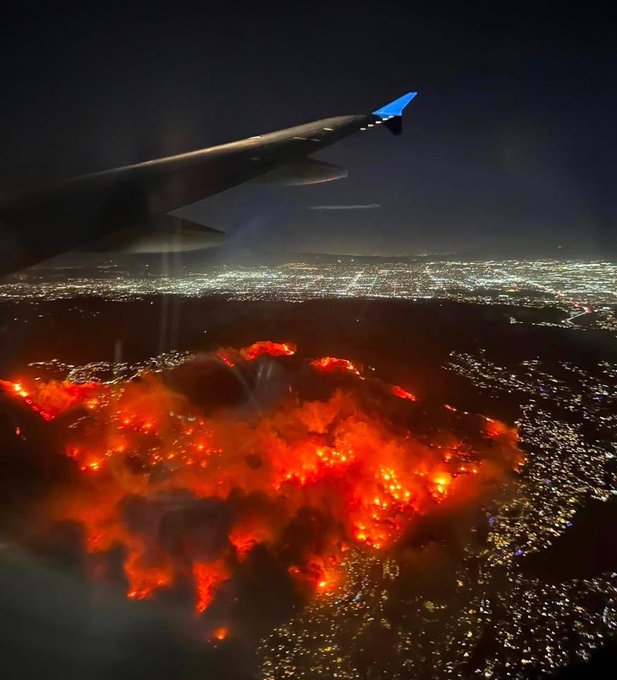
In January 2025, while the Palisades and Eaton fires were burning in Los Angeles, SpaceX and T-Mobile turned on satellite texting for the area. Fires can destroy cell towers or cut their power, so this meant some people with no signal could still send a text. Elon Musk announced it on X by quoting an earlier post from SpaceX.

Musk's post read: "Texting should now work in LA even when there is no cellular service if you use @TMobile." The SpaceX post he quoted had the details: "For those in the Los Angeles area, the @Starlink team and @TMobile have enabled basic texting (SMS) through our Direct to Cell satellites. You can now text loved ones, text 911 and receive emergency alerts."
So it was only basic texting: SMS, texts to 911 and emergency alerts. Calls and mobile data were not included. Texts use very little bandwidth, and that was all a satellite talking to an ordinary phone could handle at the time.
How a normal phone connects to a satellite
Starlink is SpaceX's network of satellites in low Earth orbit. Most people know it for home internet, which needs a dish. The Direct to Cell satellites work differently. Each one carries the equivalent of a cell tower and broadcasts on T-Mobile's mid-band spectrum, so your phone sees it as another T-Mobile network. You do not need a special phone or a dish.
A phone's antenna is small, though, and the satellite is a few hundred kilometres up. This is why the service started with text only, and why it works best outside with a clear view of the sky.
Using it in an emergency
The service had not officially launched when the fires started. T-Mobile turned it on for the affected areas as a temporary early test, because the satellite network was not fully built yet. They had done the same in October 2024, when hurricane victims in the southeast US used it to send emergency texts. When it was working, phones showed "T-Mobile SpaceX" next to the signal bars.
Emergency teams have used Starlink dishes for years to get back online when local networks fail (D4H has a good write up). A dish has to be brought in and set up first. Direct to Cell works on the phone people already carry, which I think is the bigger deal for ordinary people caught in a disaster.
What happened after LA
T-Mobile and SpaceX announced the partnership in August 2022. The plan was to cover places in the US with no cell towers at all. After the LA rollout and a public beta in the first half of 2025, the service launched commercially as T-Satellite on 23 July 2025, using more than 650 satellites. Picture messages and short audio clips were added at launch, and data for some apps followed in October. It comes with T-Mobile's top plan, and other customers, including people on other carriers, can add it for $10 a month.
The LA fires were the first time a lot of people used this, and it was during an emergency. Texting only might sound limited, but if you have no signal and need to reach someone, it is enough.
I wrote about how the technology works in more detail in an earlier post on Starlink's Direct to Cell.
Further reading
- PhoneArena: T-Mobile lets LA wildfire victims text for help using Starlink, on how the service was turned on during the fires.
- CNET's Starlink internet review, for Starlink's home internet service and pricing.
Up next: Part 4 of 7 in SpaceX and Starlink

SpaceX's Rocket Innovations Explained: Reusable Falcon 9, Starship, Raptor Engines and Drone Ships
SpaceX, under the leadership of Elon Musk, has revolutionized rocket technology with several groundbreaking innovations: Reusable Rockets: Falcon 9 and Falcon Heavy - Falcon 9 : SpaceX's Falcon 9 rocket...

