
Series: Getting Started with Machine Learning (10 parts)
A path into machine learning using free resources: where to start, which courses to take, a first look at how models learn, where to find data, projects and competitions to practise on, and people worth following.

Where to Start with Machine Learning: Jason Brownlee's Resource List and My Pick
Jason Brownlee runs Machine Learning Mastery, a site I have ended up on many times while trying to fix an error in my code. He describes his work as helping...

Andrew Ng's Machine Learning Specialization: The Updated Stanford Course for Beginners
The Machine Learning Specialization , created by Andrew Ng and DeepLearning.AI, is a revamped and modernized version of the original Stanford Machine Learning course, one of the most popular and...

fastai's Practical Deep Learning for Coders: Deep Learning Without a PhD
In case you have to do Deep learning or interested in building applications with neural networks in a hands-on way you can check out fastai by Jeremy Howard and his...
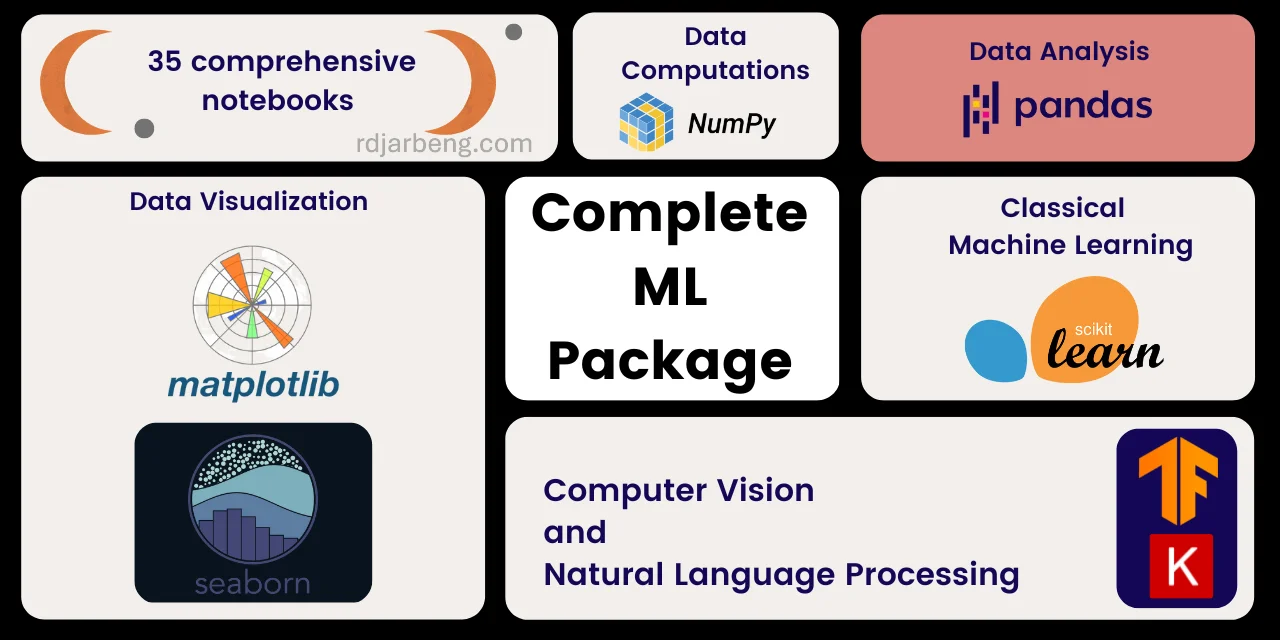
Complete Machine Learning Package: A Free, Hands-On ML Course by Jean de Dieu Nyandwi
Are you fascinated by machine learning but have no idea where to start? Do you find yourself jumping between YouTube tutorials, blog posts, and dense textbooks, only to end up...

How PyTorch Calculates Gradients: What loss.backward() and .grad Actually Do
In this post, let us take a closer look at how gradients are calculated in PyTorch, particularly focusing on the interaction between the loss.backward() function and a variable’s .grad attribute....
Where to Find Data: A Curated List of Free Datasets and Repositories
In data science and machine learning, data is the new oil—it's the fuel that powers our models and insights. But finding the right data can be a challenge. Whether you're...

Free Roboflow Notebooks for Training Your Own Computer Vision Models
Are you looking to learn how to build a computer vision model? High-quality computer vision tutorials can be found on GitHub, thanks to Piotr Skalski and the Roboflow team. Step-by-Step...

How Kaggle Competitions Help You Practise Machine Learning on Real Problems
Imagine a place where data scientists from around the world gather to solve real-world problems, compete for substantial prizes, and build their careers. That's Kaggle competitions in a nutshell -...
How Aleksa Gordić Broke into AI Engineering Without a Degree in AI
Entering artificial intelligence often looks impossible without a master's degree, a PhD, or years inside elite academic research labs. Yet one of the clearest case studies of breaking into frontier...

Machine Learning Experts to Follow
Looking for inspiration in the field of Machine Learning? Here are my top picks for experts whose work is shaping the future of AI. I’m a huge fan of Andrew...