Cover Image for Post - Why Can I Pay for Netflix Instantly, but Not Send Money Abroad? Enter Revolut
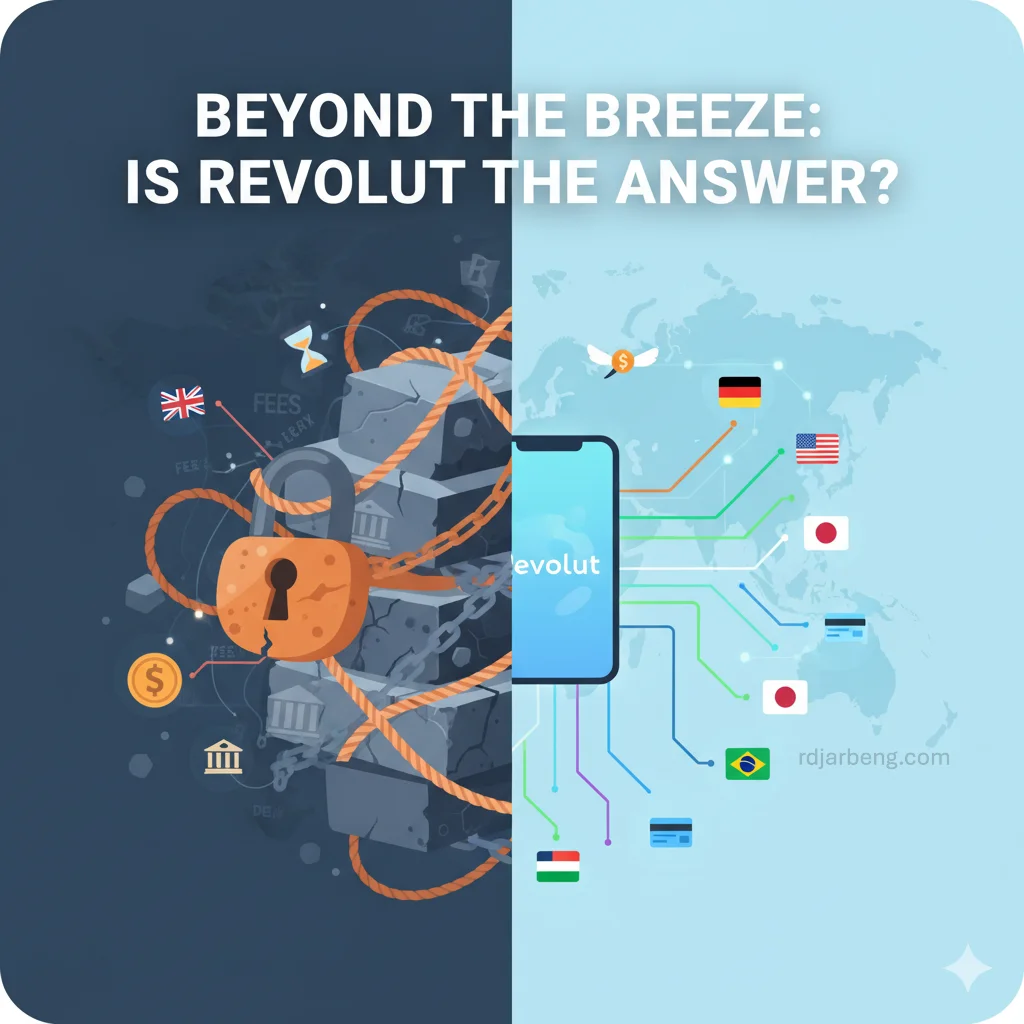
A split-screen image. On the left, a dark, chaotic scene depicts traditional banking obstacles: tangled chains, a rusted padlock, stone blocks labeled "FEES" and "DELAY," and small icons for banks and old money. On the right, a bright, clear scene shows a smartphone with the "revolut" app, connected by sleek lines to various country flags (UK, Germany, USA, Japan, Australia, Brazil, Singapore, Switzerland) and credit cards, all against a light blue map backdrop, symbolizing seamless global digital payments. The title "BEYOND THE BREEZE: IS REVOLUT THE ANSWER?" is prominently displayed across the top.
Traditional banking systems often feel like a relic of a bygone era. We live in a world where streaming services and digital platforms deliver instant gratification, yet sending money across borders remains trapped in a cycle of high fees, frustrating delays, and archaic security barriers. The contrast between our modern expectations and the reality of international transfers is stark. Traditional banks rely on legacy infrastructure that creates friction at every step of the transaction process.
Revolut represents a shift toward a frictionless financial future. By leveraging digital technology, the platform bypasses the cumbersome layers that define standard banking. It transforms the complex task of global currency exchange into a simple, instantaneous experience. As users demand more efficiency from their financial tools, digital-first solutions are proving that moving money abroad should be as effortless as any other digital service. Moving beyond the limitations of legacy systems is the primary way to achieve true financial fluidity in a globalized economy.