Why is Nvidia Selling API Keys Now? The Plain English Guide to NIMs and the AI Cloud
The landscape of artificial intelligence is shifting rapidly. For years, Nvidia was known primarily as a hardware company that manufactured the powerful Graphics Processing Units (GPUs) required for gaming and professional visualization. If you were a developer, you knew them for CUDA, which is the software layer that allows those chips to process complex mathematical data.
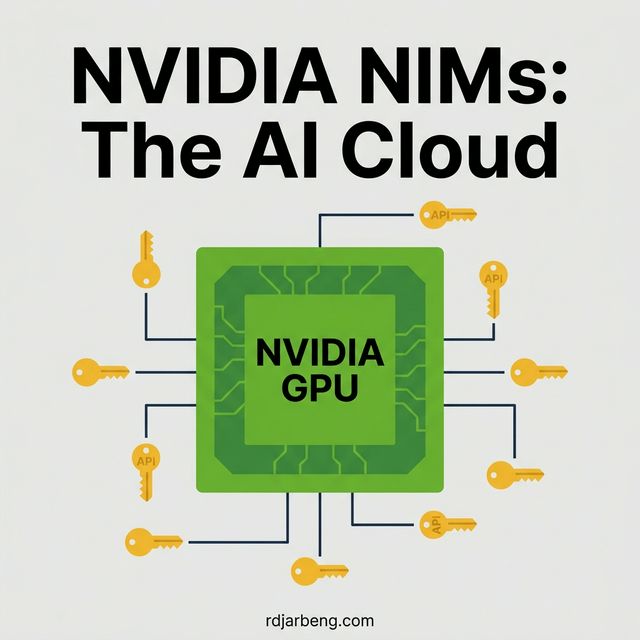
However, if you have recently heard about Nvidia providing API keys, you are noticing their transition into a service provider. They are no longer just selling the "engines" for AI; they are now providing a fully functional "transportation service" that anyone can access through a web browser.
The Transition: Why the Shift?
To understand why Nvidia is now offering API keys, it helps to look at the different ways people consume AI today.
In the past, if a company wanted to use a large language model, they had two main choices. They could pay a company like OpenAI to use a "black box" model like GPT-4, or they could buy expensive hardware and hire engineers to set up open-source models manually.
Nvidia realized there was a middle ground. They have built a massive cloud infrastructure using their own latest chips. By offering API keys, they allow developers to use the world's most powerful hardware without having to buy, house, or maintain a single physical server.
What is Nvidia NIM?
The core of this new offering is something called Nvidia NIM, which stands for Nvidia Inference Microservices. While the name sounds intimidating, the concept is straightforward once you break it down.
Understanding "Inference"
In the world of AI, there are two main stages: Training and Inference.
- Training is the process of teaching a model by feeding it trillions of words and images. This takes months and costs millions of dollars.
- Inference is the act of actually using the model. When you type a prompt into a chatbot and it generates a response, that is inference.
Understanding "Microservices"
A microservice is a small, self-contained piece of software designed to do one specific job.
Putting it Together
An Nvidia NIM is essentially a "model in a box." Nvidia takes a popular open-source model, such as Meta's Llama 3, and wraps it in a layer of specialized software. This software is pre-optimized to run at the highest possible speed on Nvidia hardware. When you get an API key for a NIM, you are getting a direct line to a high-speed, pre-configured AI model that is ready to work immediately.
Is Nvidia the New OpenAI?
There are some similarities, but their business models are fundamentally different.
OpenAI focuses on the "God Model" approach. They build a specific, proprietary intelligence (GPT) and sell you access to it. You cannot see how the model works internally, and you cannot take it with you if you decide to leave their platform.
Nvidia focuses on the "Platform" approach. They do not want to lock you into one specific model. Instead, they provide a catalog of hundreds of different models. You can choose a model for medical research, another for coding, and another for creative writing. Nvidia provides the optimized environment and the API connection, but the choice of which "brain" to use is yours.
Comparing Nvidia to Cloud Giants like AWS
It is natural to compare this to Amazon Web Services (AWS), Google Cloud, or Microsoft Azure. The answer is nuanced.
Traditional cloud providers like AWS provide a wide variety of services including website hosting, database storage, and general computing. Nvidia is not trying to replace all of those functions. Instead, they are building a specialized "AI Cloud" called DGX Cloud.
| Traditional Cloud (AWS, Google, Azure) | Nvidia DGX Cloud | |
|---|---|---|
| Primary Focus | General-purpose computing | AI training and inference |
| Services Offered | Hundreds (web hosting, databases, storage, networking, AI, and more) | Specialized AI workloads only |
| Hardware | Mixed CPUs, GPUs, and custom chips from various vendors | Nvidia's own latest GPU clusters (H100, B200, GB200) |
| Data Centers | Owned and operated globally | Hosted inside partner data centers (Google, Oracle) |
| Target User | Any developer or business | AI researchers, ML engineers, and enterprises deploying AI at scale |
Instead of building their own massive data centers in every city, Nvidia often places their specialized DGX supercomputers inside the data centers owned by Google or Oracle. Think of it like a high-end specialty kitchen operating inside a giant grocery store. The grocery store (AWS or Google) provides the space and power, while Nvidia provides the specialized tools for professional-grade AI development.
Why Technical Readers Should Care: The Optimization Layer
For the technical reader, the real value of Nvidia's API is not just the convenience. It is the integration of TensorRT.
When you run a model on generic hardware, the performance is often suboptimal. Nvidia uses a technology called TensorRT to "compile" these AI models. This process simplifies the mathematical operations within the model without losing accuracy.
By using the Nvidia API, you are accessing models that have been tuned to achieve the lowest possible "latency," which is the time it takes for the first word of a response to appear. For applications like real-time customer service bots or live language translation, these millisecond improvements are the difference between a tool that feels human and one that feels broken.
Summary for the Average User
If you are a non-technical reader, the main takeaway is that the "AI wars" are moving away from just software and into the infrastructure that powers it.
- Nvidia is making it easier for every company to have their own private AI.
- API Keys are the digital "library cards" that let you borrow Nvidia's supercomputers for a few seconds at a time.
- NIMs are the pre-packaged AI brains that make the whole process plug-and-play.
Whether you are a hobbyist looking to experiment for free at build.nvidia.com or a business leader looking to scale an enterprise application, Nvidia has successfully moved from being the company that makes the parts to the company that provides the power.
Up next: Part 5 of 6 in The Cost of AI Compute
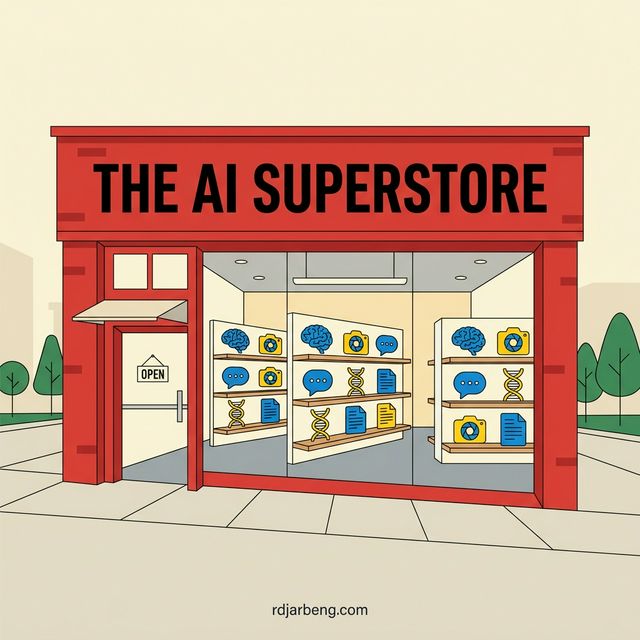
Give Me 8 Minutes To Show What You Can Actually Do With NVIDIA's Model Catalog- The AI Superstore:
If you visit the NVIDIA Build catalog today, you are greeted by a massive list of numbers, acronyms, and technical jargon. You will see names like "Nemotron," "Gemma," and "Mistral."...
Related Concepts & Posts
The following cards provide further definitions of concepts discussed above, and possible links to related posts.
What is an API Key?
An API key is a unique string of characters that acts as a credential to authenticate a user or application when making requests to a service. It is how software identifies itself to access cloud resources, similar to a digital library card.
What is CUDA?
CUDA (Compute Unified Device Architecture) is Nvidia's proprietary parallel computing platform and programming model. It allows developers to use Nvidia GPUs for general-purpose processing, which is the foundation of modern AI training and inference workloads.
What is TensorRT?
TensorRT is Nvidia's SDK for high-performance deep learning inference. It optimizes trained neural network models by fusing layers, calibrating precision, and selecting the best kernels for the target GPU, resulting in significantly lower latency and higher throughput.
What is DGX Cloud?
DGX Cloud is Nvidia's AI-as-a-service platform that provides instant access to Nvidia DGX supercomputers hosted in partner data centers (like Google Cloud and Oracle). It lets organizations train and deploy AI models without purchasing and managing their own hardware clusters.
Nvidia DGX Cloud