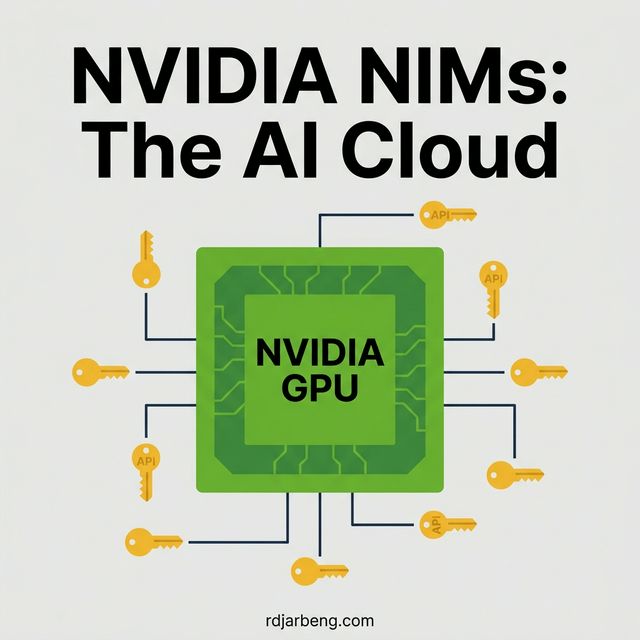
Give Me 8 Minutes To Show What You Can Actually Do With NVIDIA's Model Catalog- The AI Superstore:
If you visit the NVIDIA Build catalog today, you are greeted by a massive list of numbers, acronyms, and technical jargon. You will see names like "Nemotron," "Gemma," and "Mistral." For anyone without a technical background, it looks like a database meant only for software engineers.
However, this catalog is essentially an "app store" for artificial intelligence brains. NVIDIA has gathered the best AI models from around the world and hosted them on their own supercomputers. You do not need to buy expensive hardware to use them.
Here are the actual superpowers these models give you, and exactly how you can take them from a free prototype to a commercial product.
1. The Hollywood Toolkit (Video and Image Magic)
We are entering an era where you cannot always trust what you see on a screen. NVIDIA hosts several models dedicated entirely to manipulating and analyzing video.
- Fixing Bad Lighting: The Media Relighting model can take a video of a person and completely change the lighting on their face and body to match a new background environment.
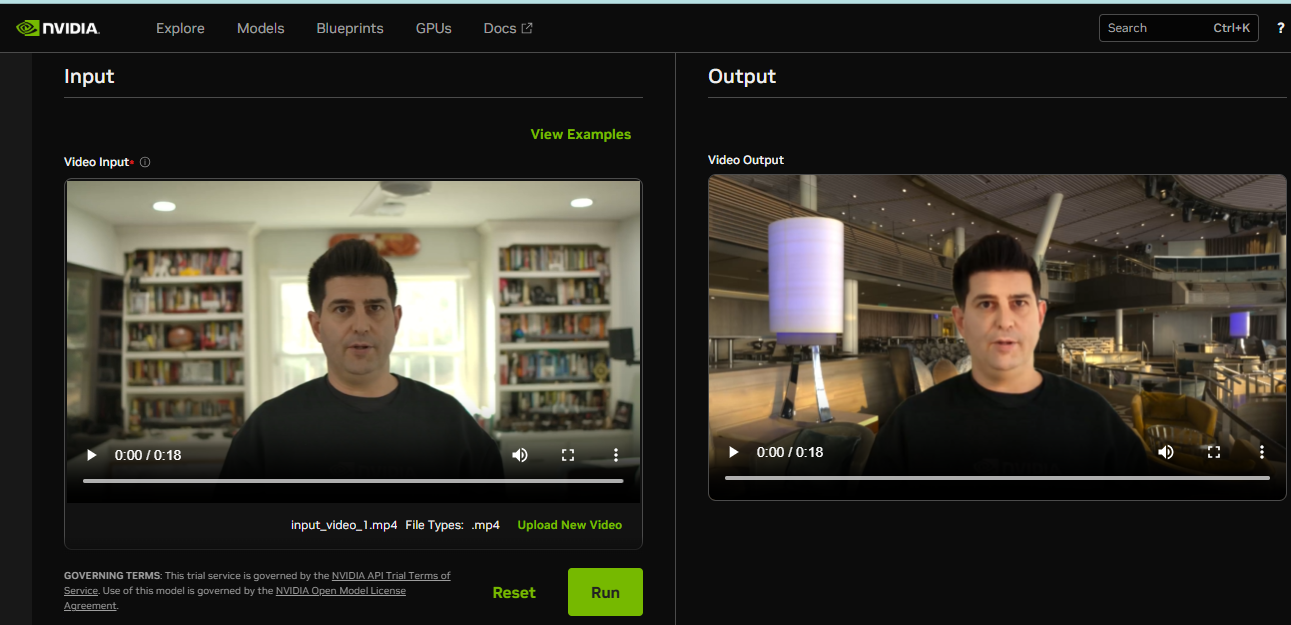
- Instant Dubbing: The LipSync model takes an audio track and automatically syncs the lips of a person in a video to match the new words.
- Spotting Fakes: The Synthetic Video Detector is a tool built specifically to look at a video and tell you if it was generated by AI.
2. The Ultimate Office Assistants (Documents and Productivity)
General chatbots like ChatGPT are great for writing emails, but they struggle with messy real-world business documents. The NVIDIA catalog has specialized models for heavy-duty office work.
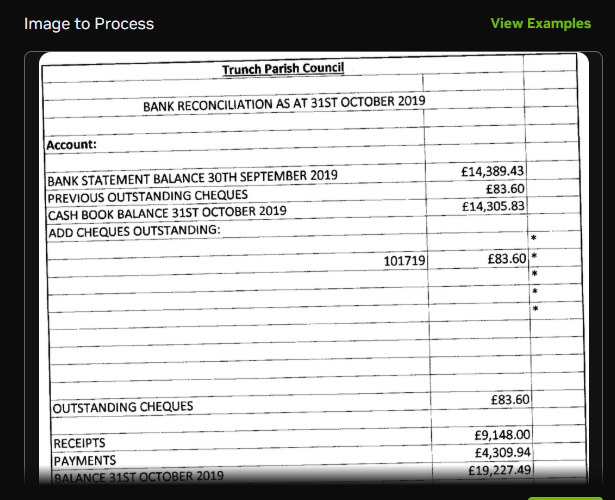
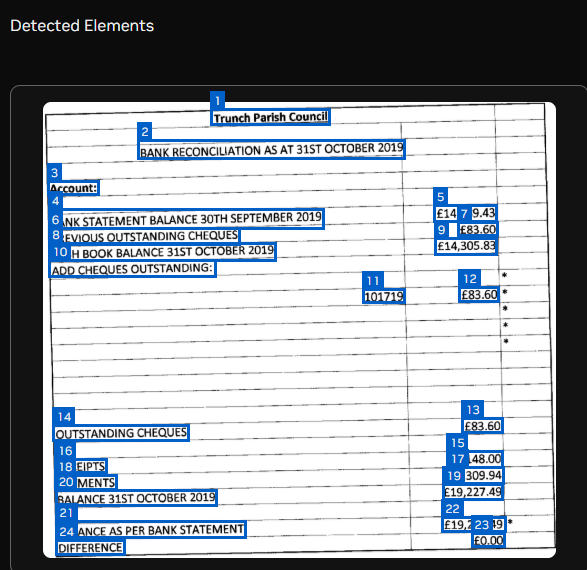
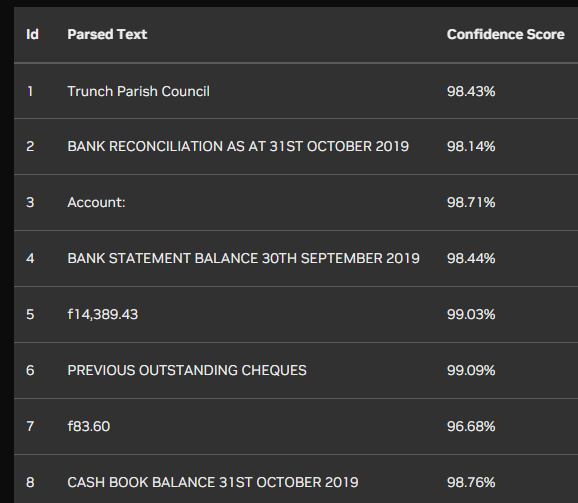
- Understanding Messy Files: Models like Nemotron OCR are designed to look at a scanned PDF or a photograph of a chart and instantly extract the data into a clean spreadsheet.
For example here is an image of a document so scan:
- Lightning Fast Creativity: If you need images for a presentation, models like Flux 2 Klein 4B generate high-quality images from text descriptions in fractions of a second. This Flux model in particular is downloadable but can also be deployed on Nvidia Cloud Infrastructure. The picture below shows a screenshot of the Nvidia build web inteface showing the prompt and the generated image from text prompt:
"a bottle of perfume on a clean backdrop, surrounded by fragrant white flowers, product photography, minimalistic, natural light"
Here is a full picture of an image generated by this model: "a macro wildlife photo of a green frog in a rainforest pond, highly detailed, eye-level shot"
- Protecting Privacy: The GLiNER PII model automatically reads through documents and redacts personally identifiable information (like social security numbers or addresses) before you share them. The screenshot you see is a demo of the model in action on the Nvidia models page.
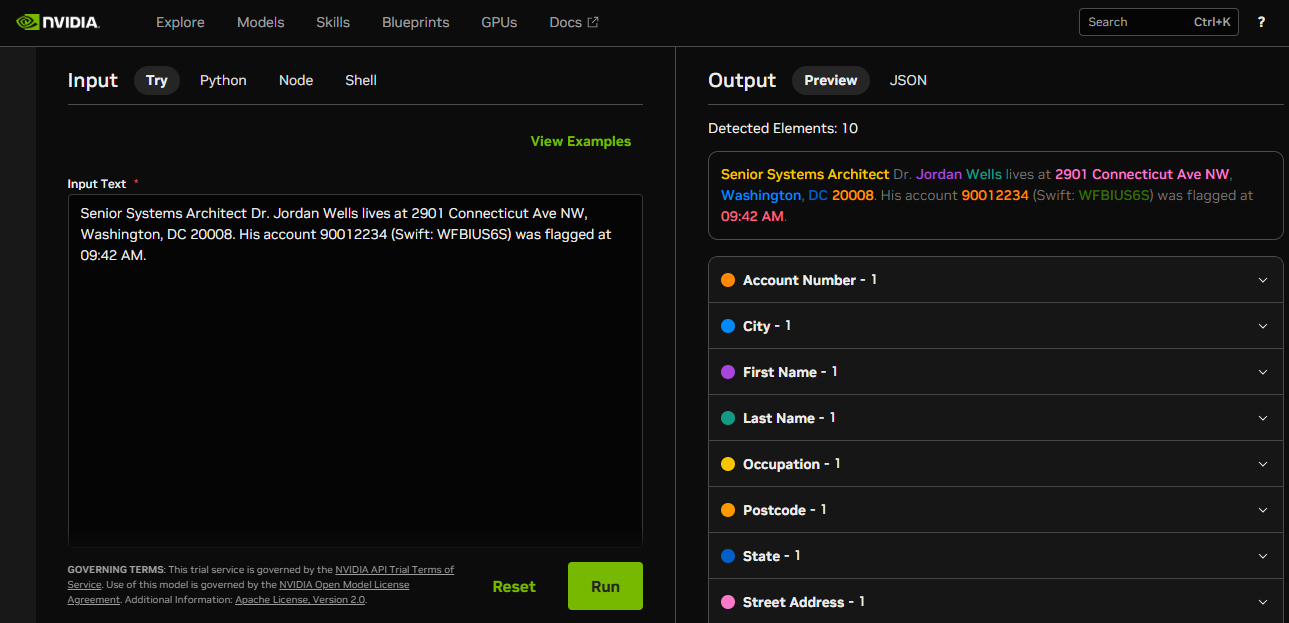 The input text includes Personally Identifiable Information (PII) from a Dr. Jordan wells.
Senior Systems Architect Dr. Jordan Wells lives at 2901 Connecticut Ave NW, Washington, DC 20008. His account 90012234 (Swift: WFBIUS6S) was flagged at 09:42 AM.
The model output hightlights the PII found and the number of Detected Elements: 10 all color coded with their confidence intervals in the screenshot.
3. The Universal Translators (Voice and Audio)
Voice assistants are moving beyond simple commands and becoming real-time conversational partners.
- Real-Time Conversations: Nemotron Voicechat allows you to build voice interfaces that understand spoken English instantly without the awkward pauses you usually get with smart speakers.
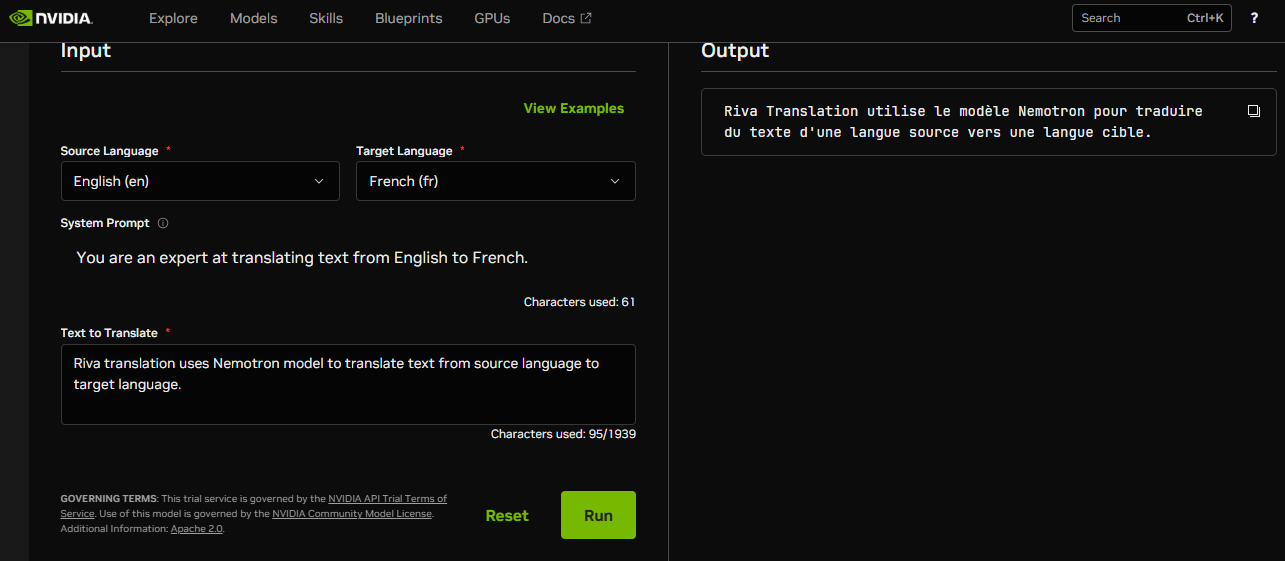
- Instant Translation: The Riva Translate model can translate spoken or written text across 12 different languages with incredible accuracy. This specific model riva-translate-4b-instruct-v1_1 is avaiable as a free endpoint translation model with few-shots example prompts capability. Demo example of Riva translate: Source Language: English (en) Target Language: French (fr)
System prompt:
You are an expert at translating text from English to French. Input: Riva translation uses Nemotron model to translate text from source language to target language. Output: Riva Translation utilise le modèle Nemotron pour traduire du texte d'une langue source vers une langue cible.
I don't speak French at the moment but this looks like a French translation to me. See the screenshot below to see how the demo looks like on Nvidia build.
4. The Mad Scientists (Healthcare and Physics)
Some of the most powerful tools on the platform have nothing to do with writing text or making images. They are designed to solve fundamental scientific problems.
- Curing Diseases: OpenFold3 is a biomolecular foundation model. It predicts the 3D structures of proteins and DNA, which is the exact technology pharmaceutical companies use to discover new life-saving drugs.
- Autonomous Driving: The StreamPETR model acts as the "eyes" for self-driving cars. It processes video feeds to detect and track 3D objects on the road in real time.

The "So What?": How to Actually Use and Commercialize These Models
Reading about these models is one thing, but how do you actually put them to work? NVIDIA has structured this catalog so that you can move from a free experiment to a fully commercialized product without having to rewrite your underlying code.
Step 1: Test in the Browser (Free)
No coding required. You do not need to be a developer to try these out. If you click on almost any model link above, you will see a chat box or an image upload interface directly on the page. You can test the AI using your own data immediately.
Step 2: Build a Prototype via API (Free Tier)
NVIDIA gives you a generous amount of free API credits when you sign up (often enough to generate thousands of responses). If you want to connect one of these models to your own app or website, NVIDIA provides an API key. This is a string of code that lets your software talk directly to NVIDIA's servers.
They use standard OpenAI-compatible formatting, meaning if your app was built to talk to ChatGPT, you can swap in an NVIDIA API key and it will instantly work with these new models.
Step 3: Deploy and Commercialize
Once you exhaust your free credits or want to launch a product to paying customers, you have two distinct options based on the model's licensing (which is listed on each model's page):
- The "Downloadable" Path: Many models on the platform are open-source. This means you can literally download the model file and run it on your own servers, on AWS, or on a local machine if you have the compute capacity. You pay nothing to NVIDIA for the model itself; you only pay for the computers running it.
- The "NVIDIA AI Enterprise" Path: If you want NVIDIA to continue hosting the model for you, or if you are using proprietary NVIDIA models (like some of the advanced Nemotron tools), you transition to their Enterprise tier. You pay by the hour for dedicated access to their supercomputers, complete with security guarantees and commercial licensing rights.
Ultimately, NVIDIA's strategy is simple: they let you prototype for free on their fastest hardware, betting that when your app succeeds, you will stick with their ecosystem to scale it up.
Up next: Part 6 of 6 in The Cost of AI Compute
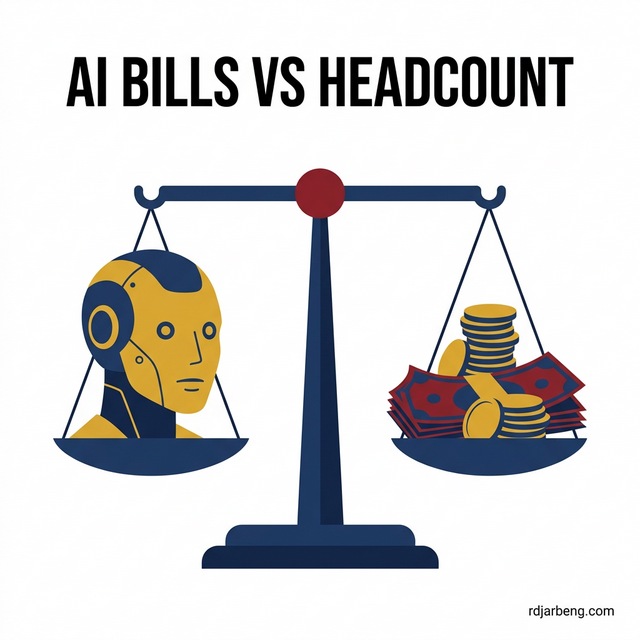
Why Your Monthly AI Bill Might Soon Rival Your Headcount Costs From A Personal Experience
The $280 Overnight Surprise A friend pinged me last week, half-laughing, half-panicking 😅 . He'd been running a couple of AI coding agents overnight, just background refactoring and test generation....
Related Concepts & Posts
The following cards provide further definitions of concepts discussed above, and possible links to related posts.
What is an AI Model?
An AI model is a program that has been trained on data to recognize patterns and make decisions. Different models are specialized for different tasks: some generate text, others recognize images, and others predict molecular structures.
What is OCR?
Optical Character Recognition (OCR) is the technology that converts images of text (scanned documents, photos, PDFs) into machine-readable text data. Modern AI-powered OCR can handle handwriting, complex layouts, and multiple languages.
What is Protein Folding?
Protein folding is the process by which a chain of amino acids arranges itself into a specific 3D shape. Predicting this shape computationally (as models like OpenFold3 do) is critical for drug discovery, because a protein's shape determines its function.
What is an API?
An Application Programming Interface (API) is a set of rules that allows different software applications to communicate with each other. When you use an API key to access an AI model, your app sends a request to the model's server and receives a response, all without managing the model yourself.
NVIDIA Build Catalog