The Developer's Guide to Payment Platforms: Stripe, Lemon Squeezy, Paddle, and Paystack
Building an app is hard. Getting paid for it shouldn’t be. In 2026, the landscape of payment providers is richer than ever. Gone are the days when PayPal was your only real option. Today, we have sophisticated platforms that not only process credit cards but also handle global tax compliance, subscriptions, and fraud protection.
In this post, we’ll dive into four of the biggest players: Stripe, Lemon Squeezy, Paddle, and Paystack. We’ll break down their pros, cons, and ideal use cases so you can make an informed decision.
1. Stripe: The Industry Standard
Stripe needs no introduction. It is the gold standard for developer-friendly payment processing. If you want full control over your checkout flow and are building a complex platform (like a marketplace), Stripe is likely your default choice.
Key Features
- Unmatched API: Stripe’s documentation and API design are legendary.
- Global Reach: Supports 135+ currencies and dozens of local payment methods.
- Stripe Connect: The go-to solution for marketplaces (e.g., Uber, Lyft) to pay out to sub-merchants.
- Stripe Atlas: Helps you incorporate a US company from anywhere.
The Catch: Tax Compliance and Signing up in Africa
Stripe is primarily a Payment Processor, not a Merchant of Record (MoR). This means you are the merchant. You are responsible for calculating, collecting, and remitting sales tax/VAT in every jurisdiction where you have customers. While Stripe Tax helps with calculation, the ultimate legal liability rests with you.
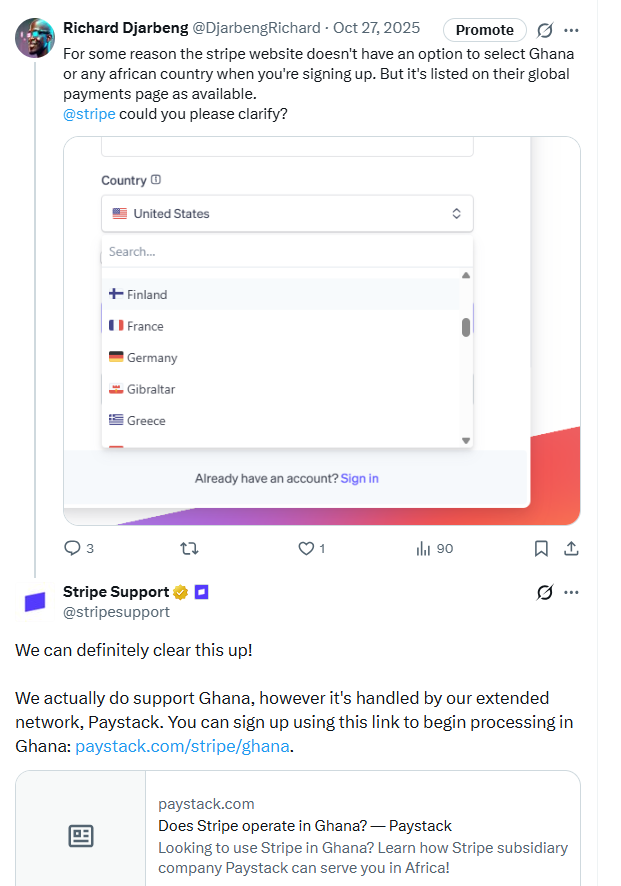
‘Global payments’ but does not directly support Africa. See the response to my enquiry on Twitter
Best For:
- SaaS platforms needing deep customization.
- Marketplaces (using Stripe Connect).
- Developers who want to build a custom checkout experience.
2. Lemon Squeezy: The Creator’s Darling
Lemon Squeezy has taken the developer world by storm. It positions itself as the “easy” button for selling digital products and SaaS. Unlike Stripe, Lemon Squeezy is a Merchant of Record (MoR).
What is a Merchant of Record?
As an MoR, Lemon Squeezy technically “resells” your product. They charge the customer, they handle the taxes, and they pay you the net revenue. This means they handle global sales tax and VAT compliance for you. For a solo developer, this is a massive headache removed.
Key Features
- Tax Handling: They file and remit taxes globally.
- No-Code Checkout: Beautiful, pre-built checkout overlays.
- Affiliate Network: Built-in tools to run your own affiliate program.
- License Keys: Native support for software licensing.
Best For:
- Solo developers and indie hackers.
- Selling digital downloads (e-books, courses, presets).
- Simple SaaS apps where you want to outsource tax headaches.
3. Paddle: The Enterprise MoR
Like Lemon Squeezy, Paddle is a Merchant of Record. However, Paddle focuses more heavily on B2B SaaS and larger software companies. They have been around longer and offer robust tools for enterprise billing.
Key Features
- Unified Platform: Combines payments, subscription management, and tax compliance.
- B2B Invoicing: Strong support for manual invoicing and wire transfers, which is crucial for selling to big companies.
- Global Compliance: Handles VAT, sales tax, and regulatory compliance in hundreds of countries.
Best For:
- B2B SaaS companies.
- Apps with complex billing needs (e.g., per-seat pricing, enterprise contracts).
- Developers who want the MoR benefits but need more enterprise-grade features than Lemon Squeezy offers.
4. Paystack: The Gateway to Africa
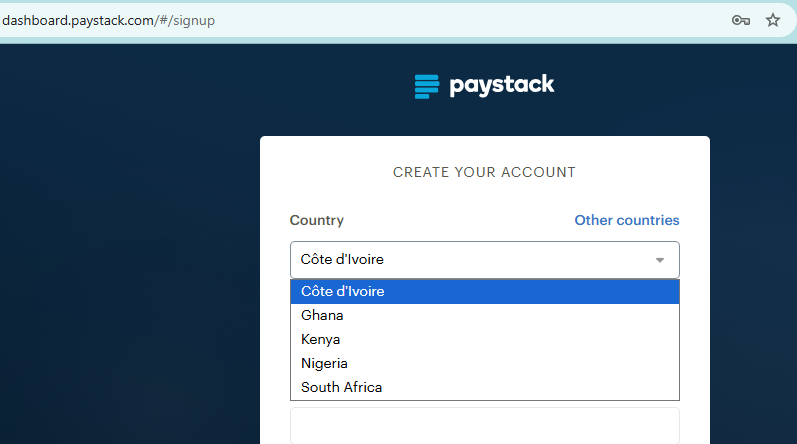
If your target market includes Africa, Paystack (acquired by Stripe) is a primary contender, explicitly supporting businesses in Nigeria, Ghana, South Africa, Kenya, and Cote d’Ivoire. It allows you to accept international cards from customers anywhere in the world, while also providing deep integration with essential local financial channels in these markets.
Key Features
- Local Channels: Accepts payments via Mobile Money (M-Pesa, MTN MoMo), USSD, and bank transfers, which are often more popular than cards in many African regions.
- High Success Rates: Optimized for local networks, ensuring higher transaction success rates than international gateways.
- Developer First: Like its parent company Stripe, Paystack offers excellent documentation and APIs.
Best For:
- Startups and businesses targeting African customers.
- International companies expanding into Africa.
Comparison at a Glance
| Feature | Stripe | Lemon Squeezy | Paddle | Paystack |
|---|---|---|---|---|
| Type | Payment Processor | Merchant of Record | Merchant of Record | Payment Processor |
| Tax Filing | You do it (Tools available) | They do it | They do it | You do it |
| Fees (Approx) | ~2.9% + 30¢ | ~5% + 50¢ | ~5% + 50¢ | Varies (e.g., 1.5% in NG) |
| Best For | Customizability & Marketplaces | Indie Hackers & Digital Products | B2B SaaS & Global Compliance | African Market Focus |
| Ease of Setup | Medium | High | Medium | High |
Conclusion
The “right” choice depends entirely on your business model:
- Choose Stripe if you are building a complex platform, a marketplace, or have a dedicated finance team to handle taxes.
- Choose Lemon Squeezy if you are a solo founder or selling digital assets and want to avoid “tax hell.”
- Choose Paddle if you are a growing B2B SaaS needing enterprise billing features alongside tax compliance.
- Choose Paystack if you are building for the African continent in supported countries and have your business registered.
Whichever you choose, the good news is that integrating payments has never been easier. Grab an API key and start building!